

Law Office of Andrew L. Gradman, APC

310-710-6636
1308 E Colorado Blvd #2483
Pasadena, CA 91106
I am a tax lawyer, focusing on transactions (as opposed to audit/controversy). This means that:
◦ I help non-tax lawyers to draft documents which maximize after-tax value.
◦ I help CPAs to reflect these events on tax returns.
◦ I advise individuals and businesses directly when their lawyers and CPAs refer them with discrete questions.
Download my CV for links to my publications and presentations.
Representative Projects
- Qualified Opportunity Zones (QOZs). Help investors, QOFs, and QOZBs qualify and maximize benefits.
- Qualified Small Business Stock (QSBS / §1202 stock). Help investors and businesses qualify and maximize benefits.
- Corporation and partnership structuring. Advise on M&A, waterfalls, compensation, deductions and credits.
- Compensation planning. Advise on restricted stock, 409A, 401(k)s and IRAs.
- Estate and gift tax planning. Advise on trusts, gifts, valuation discounts, partnership freezes, basis step-up.
- Sales. Advise on 1031 exchanges, 453 installment sales, tax-free reorganizations, pre-sale emigration out of California, California property tax.
- Litigation planning. Draft complaints and settlement agreements to reduce taxes and clarify filing responsibilities.
Education and Credentials
- Certified Tax Specialist, California Board of Legal Specialization; CA bar # 277-237
- NYU School of Law, LL.M. in Taxation, 2016.
- NYU Stern School of Business, Advanced Professional Certificate in Law & Business, 2016.
- Columbia Law School, J.D., 2011.
- Stanford University, B.A. (History), 2006.
FAQs
1. When do you need a transactional tax lawyer?
First, you should be considering a transaction—a contract of any kind. For example, a merger, an estate plan, a litigation settlement. And you should know the terms you care about most—the terms I should not change. My job is to improve your after-tax results, by proposing changes to every other term. Often, my proposals will look unattractive to you, but for the tax savings. I like to say: “Tax planning is the art of the sacrifice.” And also: “Tax planning is not a coat of paint—it’s a change to the blueprints.” This is why it helps to seek tax advice early.
I do my best work when you are already working with another professional who is responsible for the project (e.g.: corporate attorney, estate planning attorney, plaintiff’s attorney, tax return preparer). I give them a recipe, which they know how to follow—i.e., a tweak to a document, or a line to put in a tax return. I have a harder time helping people who aren’t considering a particular transaction and who simply want help lowering their taxes. However, if you are considering a tax-motivated transaction which I did not propose, I can point out the risks.
While I can advise your CPA on how to prepare your tax return, I do not prepare or file returns myself.
2. Why do you need a tax opinion?
Most of my time is spent forming opinions. That is: You are paying me to convince myself that, if you make a particular change to your proposed transaction (often, a change which I proposed), the hoped-for tax result would survive IRS challenge. To help you make an informed decision—and also for my own protection—my standard client agreement states that “you should not rely on advice given orally unless subsequently confirmed in an email or other writing.”
My opinions are not guarantees. If the IRS disagrees with my position, it may then decide whether to impose certain penalties. When it does so, it may consider your reliance on my opinion as a favorable factor. This is a second benefit of having my opinion. However, my ability to issue an opinion for this purpose is limited by the rules which regulate tax professionals (US Treasury Circular 230). Accordingly, my standard client agreement states: “If I offer a tax opinion, you should not rely on it for avoiding tax penalties unless I expressly confirm it is proper to do so.”
3. What should you expect from our first call? (Do I charge?)
Most of my clients are referred to me by professionals who know my work and have in mind specific questions I can answer. On our first call, clients tend to expect me to answer these questions. I strive to do that, and often do. Answering these questions is what I do for a living. For all these reasons, I typically do charge for initial calls. The fee is a flat fee of one hour, payable online before we speak. This covers the call and, if appropriate, a follow-up email summarizing my advice.
If there is a need for further work, I request a deposit and bill hourly. I will try to give an estimate, but in many cases I can’t give a meaningful estimate until I’ve been hired and made some progress. If the engagement is terminated, any unearned deposit will be refunded to you. If the final amount due exceeds the deposit on hand, the excess will be invoiced.
4. What distinguishes me from other tax lawyers?
Hire me if you want “big law firm” quality of work, without the downsides.
Big firms do great work. They draw the best talent. They are thorough—they take the time to identify your goals and concerns, read your documents carefully, ask good follow-up questions. If one person has a bad idea, another person will poke holes in it. In this sense, I want my clients to feel like they’re working with a big firm. (I poke holes in my own bad ideas.)
However, I don’t charge big law rates. I don’t delegate to subordinates. I have no overhead, so I won’t use you to meet my monthly quota (I don’t have one). I care about your customer experience because I rely on referrals. I am accessible and work quickly.
Don’t hire me if you’re looking for someone to bless the most aggressive positions—the maximum possible tax savings. While I support your right to take risks, I can be penalized if I contribute to your filing a return which understates your taxes without sufficient legal basis. I won’t compete in a race to the bottom.
In short: Hire me if you want good work, not aggressive work.
5. Caution: the IRS can use your AI conversations against you.
Be warned: If your case goes to court, the IRS gets to demand any relevant evidence you have—including your chats with AI. Because AI is not an attorney, you can’t claim the attorney-client privilege. U.S. v. Heppner (SDNY Feb. 17, 2026). And if you give AI my privileged emails, those stop being privileged too.
Bottom line: If you discuss your tax situation with AI, please let me know, so we can discuss how to do it safely.
6. When you see a claim that a transaction is “tax-free,” remember:
So is putting all your money in a bucket and lighting it on fire. (That’s why our goal together is to improve the “after-tax bottom line,” not to generate “tax savings.”)
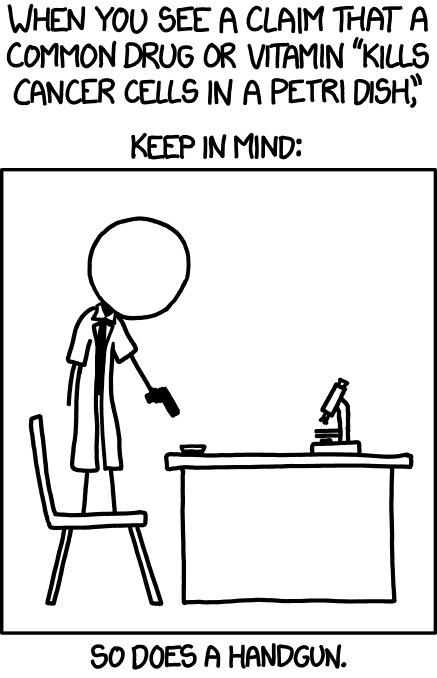
Credit: https://xkcd.com/1217/
Other Downloads
- OBBBA Redlines
- Tax Holiday Calendars: 2024, 2026
- PDFs on website